
Where to Eat, Shop, and Relax
The warm scent of powdered sugar drifting through the air, the distant strum of a jazz guitar, vendors calling out over a sea of handmade jewelry and bright Creole spices, and the wide, muddy Mississippi rolling just beyond the levee. That’s the New Orleans French Market on any given morning — and honestly, words barely do it justice.
One of the oldest public markets in the United States, the French Market has been a beating heart of New Orleans life since 1791. It’s not just a place to pick up a souvenir or grab a bite. It’s where the city’s soul shows up in full color. Whether you’re a first-timer trying to figure out where to even begin, or a local who hasn’t wandered through in a while, this guide is your go-to resource for eating, shopping, and unwinding at the New Orleans French Market.
A Brief History Worth Knowing
Long before there were beignets and pralines, there was trade. The site of today’s French Market was originally a Native American trading post used by the Choctaw people, who bartered goods along the river’s edge for generations. When French colonists arrived in the early 18th century, they recognized a good thing and built upon it. The Spanish, who later took control of Louisiana, formalized the market structure — and by 1791, the French Market as an official institution was born.
Over the decades, it grew into the economic and cultural backbone of New Orleans. Immigrants from France, Spain, Italy, and beyond all left their mark here, turning the Market into a rich stew of languages, flavors, and traditions. At its peak in the 19th century, it was one of the most important commercial hubs in the entire South.
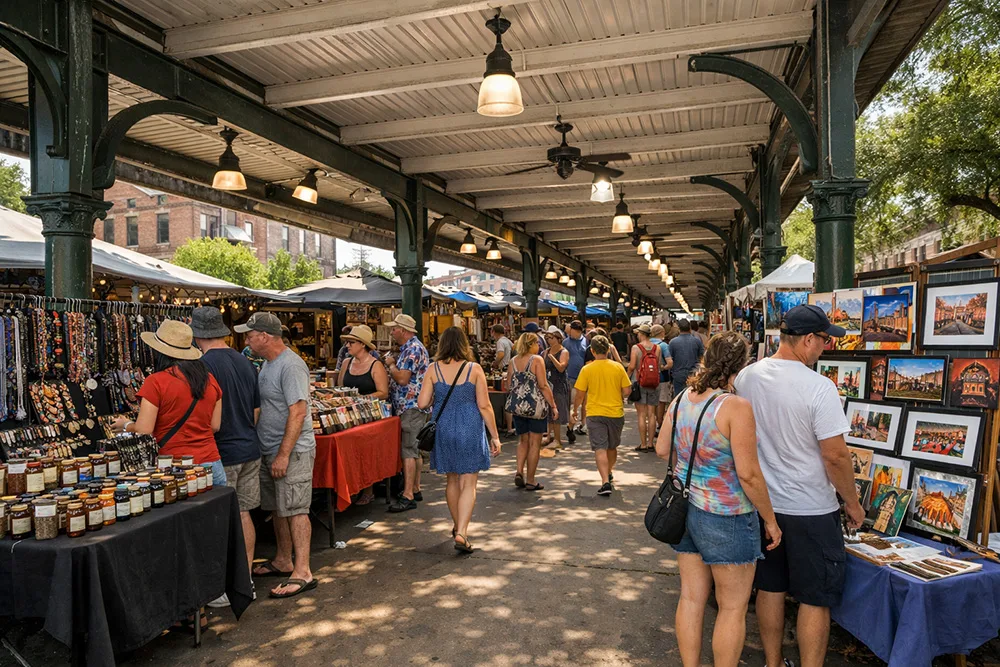
Today, the French Market stretches several blocks along Decatur Street and is divided into six distinct districts, ranging from the historic covered market buildings near Café Du Monde all the way down to the open-air flea market closer to Esplanade Avenue. Each section has its own personality, and together they tell the story of how New Orleans has evolved while holding tight to its roots.
Getting There and Getting Around
The French Market runs along Decatur Street, hugging the Mississippi River on the edge of the French Quarter. It’s one of those rare places in New Orleans that’s actually easy to find — just head toward the river and follow the smell of café au lait.
Getting there is half the fun. If you’re staying in the Quarter, it’s almost certainly walkable from your hotel. From Jackson Square, it’s just a short stroll toward the river. You can also hop on the St. Charles Streetcar or catch a rideshare — both drop you close enough that you won’t need to hike. If you’re driving, street parking along Decatur can be a bit of a hunt, especially on weekends. Your best bet is one of the nearby parking garages on Bienville or Conti Street and walking from there.
Most of the Market’s flea market vendors are open daily from around 9 a.m. to 6 p.m., while the farmers and producers market typically runs on weekends. Weekday mornings are your sweet spot if you want calm, uncrowded browsing and the freshest produce picks. Weekend afternoons bring energy, street performers, and a lively crowd — great if you love people-watching, but not ideal if you’re in a hurry.
The Market is largely accessible along its main pathways, though some areas of the flea market can get a little tight with foot traffic. Uneven brickwork in parts of the French Quarter means comfortable, flat-soled shoes are a non-negotiable — more on that later.
Where to Eat at the French Market
Café Du Monde — The One You Can’t Skip
Let’s be real: no trip to the New Orleans French Market is complete without stopping at Café Du Monde. This legendary open-air coffee stand has been serving up hot beignets and café au lait since 1862, and it shows no signs of slowing down. The beignets come out hot, airy, and buried under a snow drift of powdered sugar — wear something dark at your own risk.
The line can stretch long, especially on weekend mornings. The insider move? Go early on a weekday, or try stopping in mid-afternoon when the breakfast rush has cleared. It’s open 24 hours, so a late-night beignet run is always an option, too.
However, if you are vegan, then Café Du Monde is not the place for beignets. Meals From The Heart Café is popular for their vegan beignets and taste just as good as their regular counterparts.
The French Market Restaurant & Bar
If you’re ready to sit down and really dig into some Louisiana cooking, The French Market Restaurant & Bar is right there in the mix. Think shrimp po’boys, red beans and rice, and jambalaya made with that unmistakable Creole depth. It’s casual enough that you can show up in your walking shoes but flavorful enough to feel like a real New Orleans meal.
Street Food and Local Vendors
Part of what makes things to do at the French Market New Orleans so memorable is the sheer variety of snacks you can grab as you wander. Pralines — those sweet, buttery, pecan-packed candies — are practically a French Market institution. You’ll also find vendors offering Creole seasonings, hot sauces, fresh fruit, and all manner of tempting bites. Go slow, graze a little, and let your nose lead the way.
Meals From the Heart Cafe
Tucked right in the historic French Market, Meals From the Heart Cafe is a standout for anyone looking for something a little different without sacrificing an ounce of New Orleans flavor. The cafe serves up the iconic tastes of New Orleans cuisine in vegan, gluten-free, and traditional versions — so whether you’re plant-based, avoiding gluten, or just hungry, there’s something here for you. It’s proof that soul food and dietary-friendly cooking aren’t mutually exclusive. If you’ve been wondering where to eat in the French Quarter without compromising your lifestyle, this is a great answer.
Where to Shop at the French Market
The Flea Market
The flea market section of the French Market is the kind of place where you can spend an hour just drifting. Vendors set up daily with everything from vintage clothing and antique jewelry to handmade crafts, oil paintings, and enough quirky novelty items to fill a carry-on. It’s a browser’s paradise.
The key to shopping here well is knowing what you’re looking for. If you want an authentic, locally made souvenir, take your time and talk to the vendors. Many of them are artists and makers who’ve been setting up here for years. Ask where something is made. A handmade ceramic bowl or a piece of original artwork beats a mass-produced “I Heart NOLA” magnet every single time.
The Farmers and Producers Market
French Market shopping gets especially good at the farmers market, typically open on weekends. Here you’ll find fresh Louisiana produce, gulf seafood, local honey, Creole spice blends, and specialty food products you genuinely can’t find anywhere else. It’s a wonderful spot to pick up edible souvenirs — a jar of homemade pepper jelly or a bag of Cajun seasoning travels well and tastes like home long after you’ve left.
Tips for Navigating the Stalls
A few practical things that’ll save you some headaches: bring cash. While some vendors have started accepting cards, plenty still prefer cash, and you don’t want to miss out on something great because you’re empty-handed. Also, don’t be shy about browsing slowly or asking questions — that’s part of the culture here. Light negotiating is sometimes welcome, especially toward the end of the day when vendors may be more flexible.
Where to Relax at the French Market
Shopping and eating are wonderful, but New Orleans has a pace all its own — and the French Market area is one of the best places in the city to simply slow down.
The Mississippi River Levee
Just steps from the Market, the Mississippi River levee offers one of the most iconic views in the city. Grab your café au lait, find a spot along the walk, and watch the massive river roll by. It’s simultaneously humbling and peaceful. The breeze off the water is a genuine relief on hot Louisiana afternoons, and the view of the river traffic — from tugboats to massive cargo ships — is endlessly interesting.
Woldenberg Riverfront Park
Right next to the levee, Woldenberg Riverfront Park is a beautifully maintained green space perfect for a leisurely stroll or a shady bench break. It connects to the French Market area and stretches along the river, making it ideal for a post-lunch walk or a quiet moment away from the crowds.
People-Watching and Street Performers
Let’s be honest — sometimes the best entertainment in New Orleans is just watching the city do its thing. The French Market area draws street musicians, artists, fortune tellers, and characters you simply won’t encounter anywhere else. Pull up a chair, order a drink, and take it all in. There’s a reason people say New Orleans gets under your skin.
Best Photo Spots
The best photo spots in and around the French Market include the ornate ironwork of the covered market buildings, the view from the levee toward the Crescent City Connection bridge, the colorful vendor stalls in the flea market, and, of course, a powdered-sugar-covered face at Café Du Monde. Natural light is best in the early morning and the golden hour before sunset.
Events and Special Experiences
The French Market isn’t just a place — it’s a living event calendar. The French Market Festival, held each fall, is a beloved annual celebration that fills the Market with live music, local vendors, and community spirit. It’s one of those New Orleans experiences that locals circle on their calendars every year.
During Mardi Gras season, the energy around the Market shifts into something electric. Vendors stock up on beads and masks, the crowds thicken, and the whole neighborhood feels like one long celebration. If you’re visiting during Mardi Gras, the French Market is an excellent home base for soaking in the culture without getting too deep into the chaos.
The holiday season brings its own magic, with seasonal markets and decorations that give the historic buildings an especially warm glow. And year-round, you can catch live music and cultural programming in and around the Market — check the French Market’s official website for current schedules before your visit.
Tips for Making the Most of Your Visit
A few things that’ll genuinely improve your experience:
Arrive early. Morning visits mean fresher produce, shorter lines, and cooler temperatures — no small thing in New Orleans, where summers are no joke.
Bring cash. We mentioned it in the shopping section, but it bears repeating. Many vendors are cash-only, and ATM fees add up fast.
Wear comfortable shoes. The French Market spans several blocks, and the surrounding French Quarter streets feature uneven brick sidewalks. Flip-flops might feel right for the weather, but your feet will thank you for some real support.
Combine your visit with nearby spots. Jackson Square, Café Du Monde, and the Moonwalk (the pedestrian boardwalk along the river) are all within easy walking distance. Plan a few hours and make a day of it.
As for the best time of year to visit, late fall through early spring hits the sweet spot — comfortable temperatures, major festivals like Mardi Gras and French Quarter Fest on the horizon, and crowds that are lively without being overwhelming.
Nearby Attractions Worth Pairing With Your Visit
Since you’re already in one of the most interesting corners of New Orleans, it’d be a shame to rush off. Jackson Square — with its iconic St. Louis Cathedral and the artists who set up around its perimeter — is a five-minute walk from the Market. It’s one of the most photographed spots in the city for good reason.
If you’re a history buff, the Steamboat Natchez boards right along the riverfront near the French Market and offers narrated cruises on the Mississippi. It’s touristy in the best way possible.
The French Quarter’s galleries and boutiques along Royal Street are worth an afternoon detour for anyone interested in art, antiques, or local fashion. And if you’re willing to venture a bit further, The National WWII Museum is a short rideshare away and ranks among the finest history museums in the country.
The French Market Is Still the Real Thing
In a city full of unforgettable experiences, the New Orleans French Market holds its own with a kind of quiet confidence. It’s been here for over 200 years, and it’s seen the city through wars, floods, festivals, and everything in between. What makes it special isn’t just the history or the food — it’s the feeling that you’re participating in something that’s still very much alive.
Don’t just breeze through on your way to Bourbon Street. Slow down. Talk to a vendor. Sit by the river. Try something you’ve never had before. The French Market shopping, the street food, the music drifting over from the square — it all adds up to something that’s genuinely hard to find anywhere else.
Ready to plan your visit? Check out the French Market’s official website for current hours, events, and vendor information. And if this guide helped you make the most of your trip, share it with a friend who’s got New Orleans on their bucket list. The more people who discover what makes this place special, the better.